Introduction
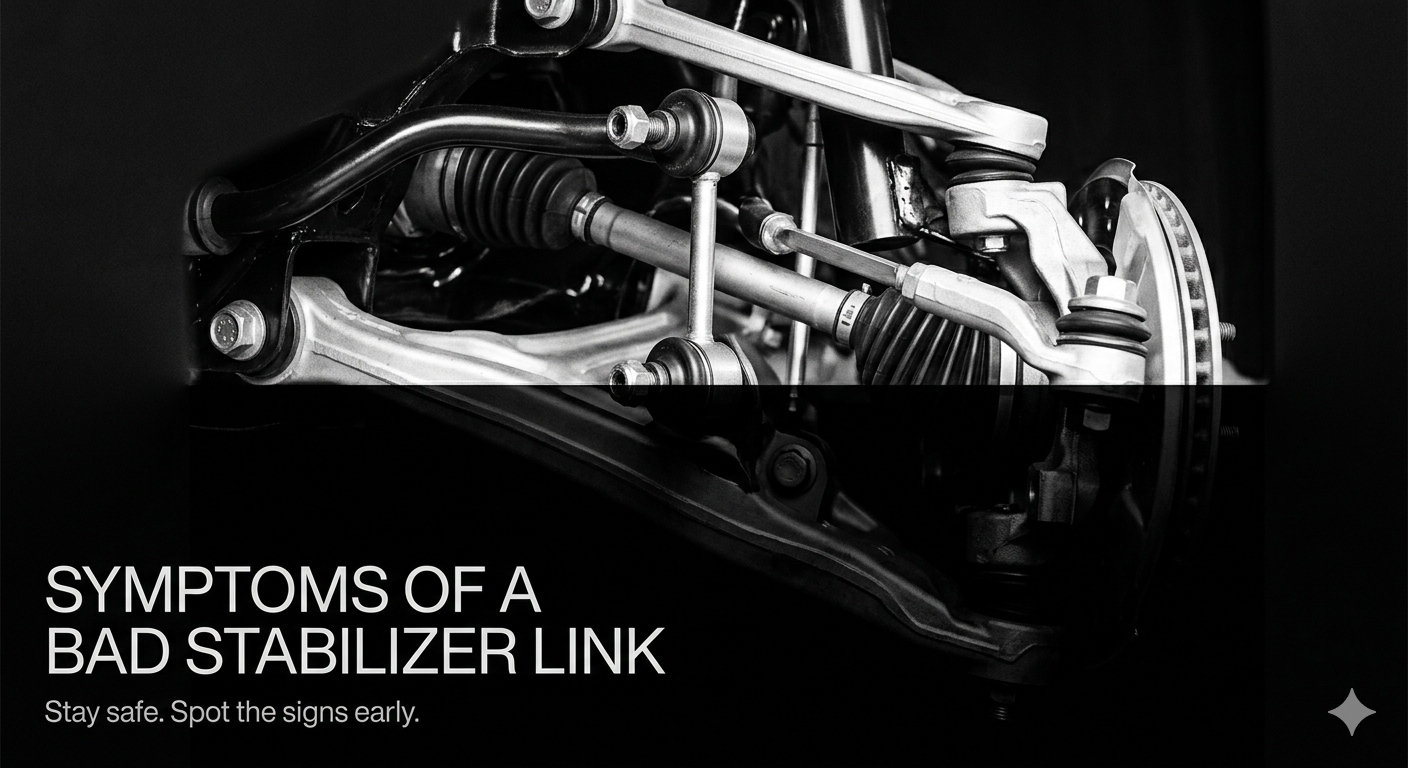
That Clunking Sound Isn’t Your Radio
Is your car making an unnerving knocking noise every time you hit a slight bump? Does it feel less stable through corners, or even “floaty” on the highway? You might be experiencing the classic symptoms of a bad stabilizer link.
Also known as a sway bar link or an end link, this small, often overlooked suspension component is essential for your vehicle’s stability, steering precision, and overall ride comfort. When it fails, the consequences can quickly move from annoying noises to a compromised (and potentially dangerous) driving experience.
At Kamsiparts Automotive, we are dedicated to keeping your vehicle running smoothly and safely. In this comprehensive guide, we will break down exactly what a stabilizer link is, the common warning signs of failure, the actual risks of driving on a broken one, and how to fix it.
What is a Stabilizer Link (and Why is it Important)?
Think of the stabilizer link as the crucial bridge. Its primary job is to connect the sway bar (or anti-roll bar) to the main suspension components (like the control arms or struts) on each wheel.
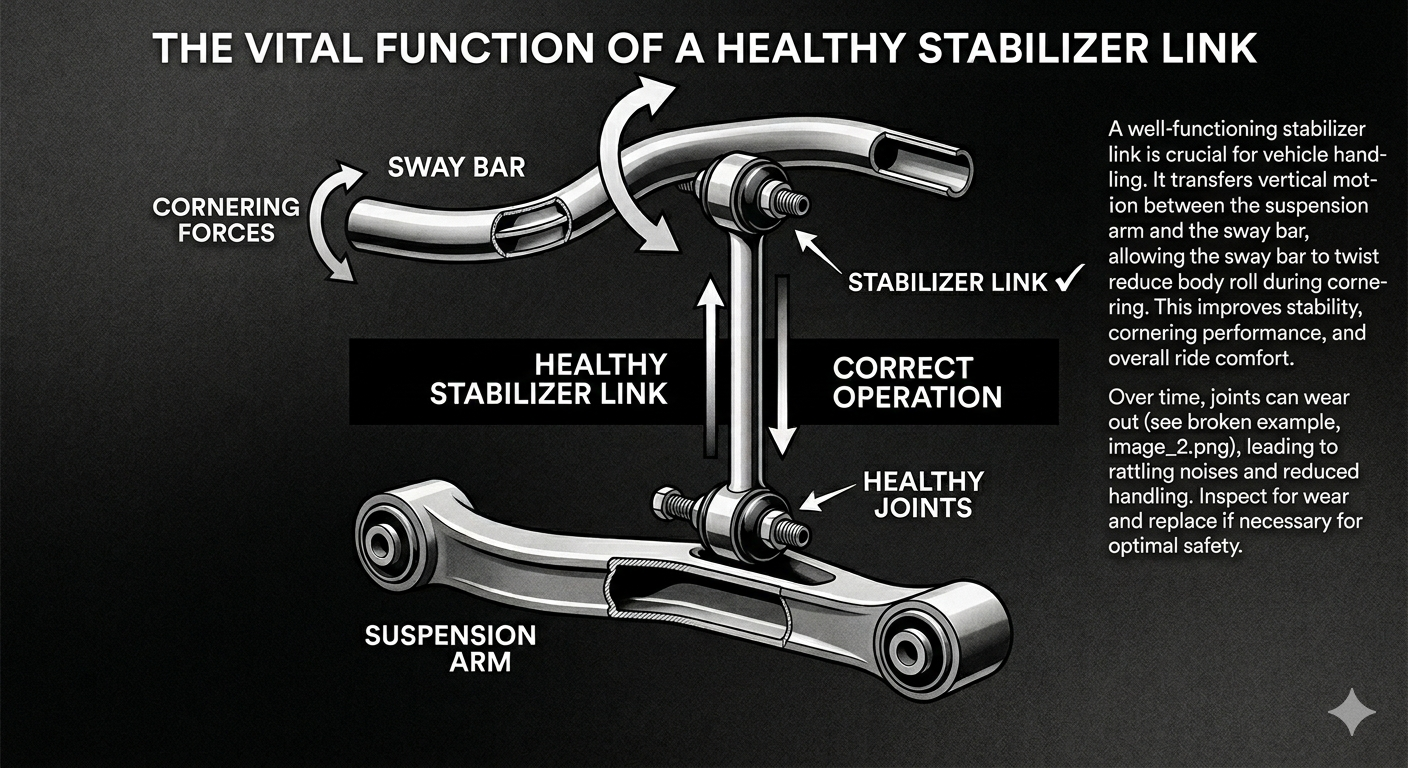
The sway bar’s entire function is to reduce the tendency for your car’s body to lean, or “roll,” during cornering. It accomplishes this by transferring force from one side of the suspension to the other. The stabilizer links are the connectors that make this stabilizing force transfer possible.
When they are healthy, your ride is stable, your steering is crisp, and your cornering is flat. When they fail, that vital connection is lost, leaving your vehicle feeling less secure.
Common Symptoms of a Bad Stabilizer Link (5 Key Warning Signs)
Don’t ignore the early warnings. Failed stabilizer links are almost always noticed first by the sounds they make and the feeling of instability they create. Here are the 5 classic signs:
1. Distinct Clunking or Rattling Noises (Over Bumps or Turns)
This is almost universally the very first symptom noticed by drivers. The stabilizer link connects moving parts. When the small ball joints at either end wear out or lose their necessary lubrication, they develop excessive “play,” or looseness.
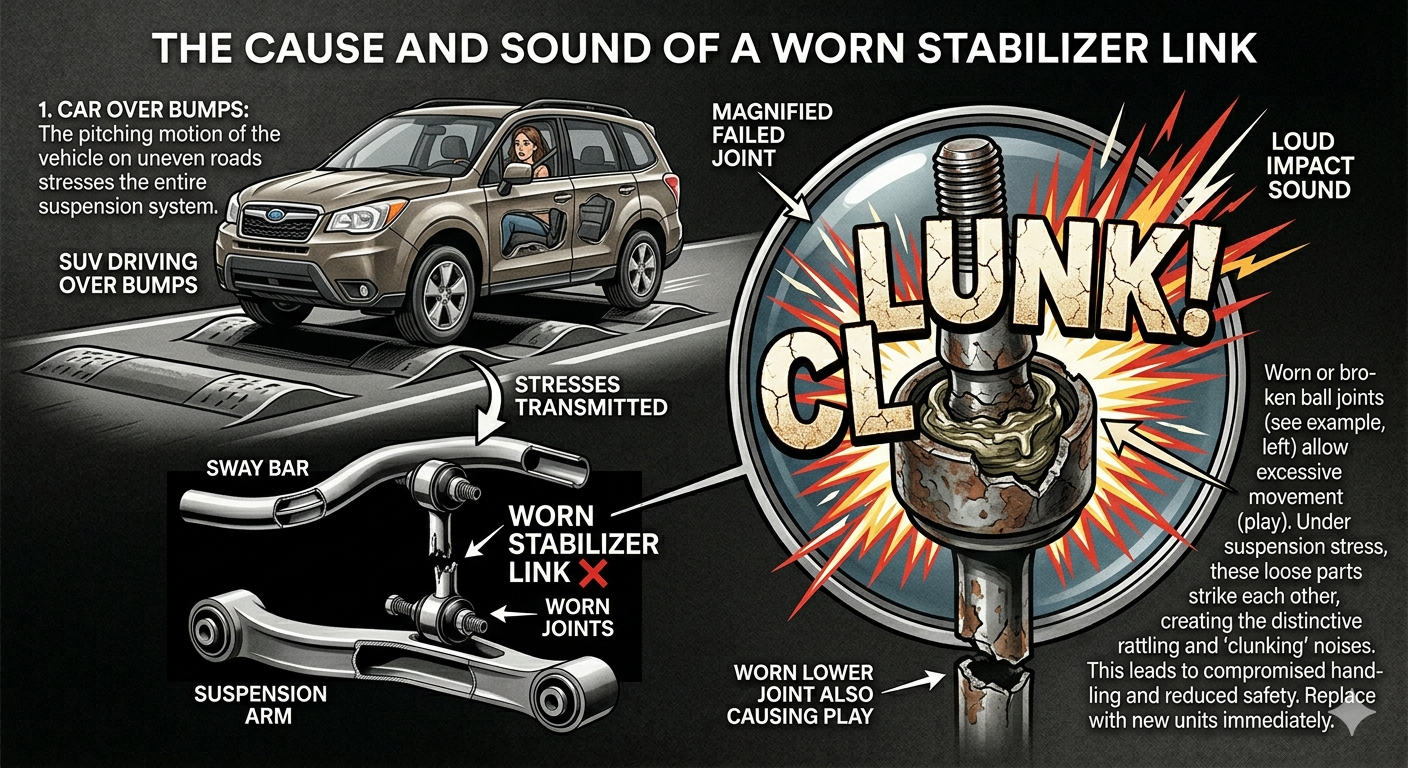
Every time that wheel travels over a pothole, a speed bump, or even a minor crack in the road, that loose joint will snap back and forth. The result is a sharp, distinct suspension clunking noise or a heavy rattling sound, especially noticeable during low-speed cornering or when driving over uneven pavement.
2. Excessive Body Roll or Car Sway
Since the link’s job is to keep your car level, its failure removes the necessary resistance against the centrifugal force that pushes the car’s body outward during a turn.
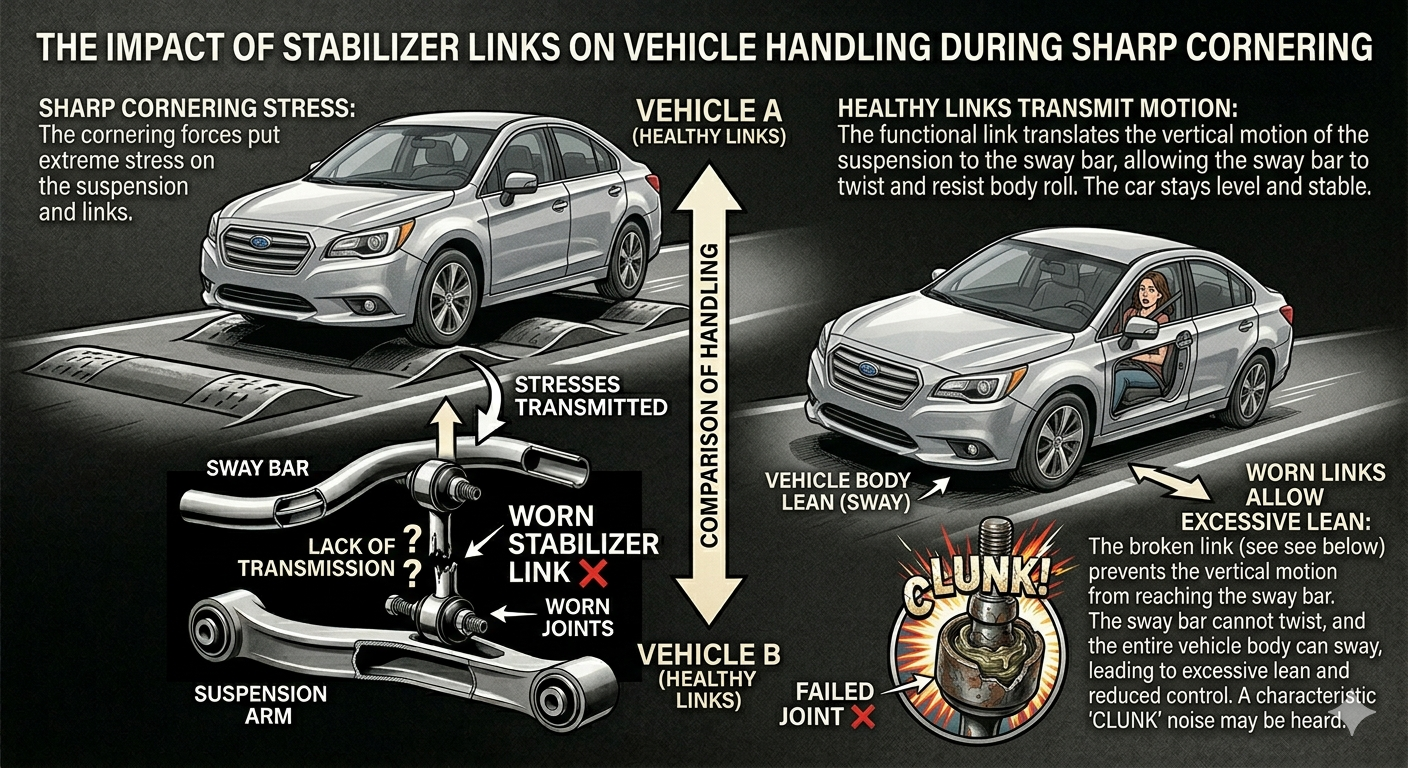
You will experience this as excessive car sway or “leaning” through corners. The vehicle may feel less agile and more “boat-like” during normal driving or even normal lane changes. This isn’t just an annoyance; it significantly reduces your confidence and control when trying to make emergency maneuvers.
3. Unstable or Loose Handling (The “Floaty” Feel)
This specific symptom, as highlighted in Slide 3 of the carousel, often indicates that the sway bar is almost entirely disengaged from the suspension system on that side. This leads to a massive loss of lateral stiffness.
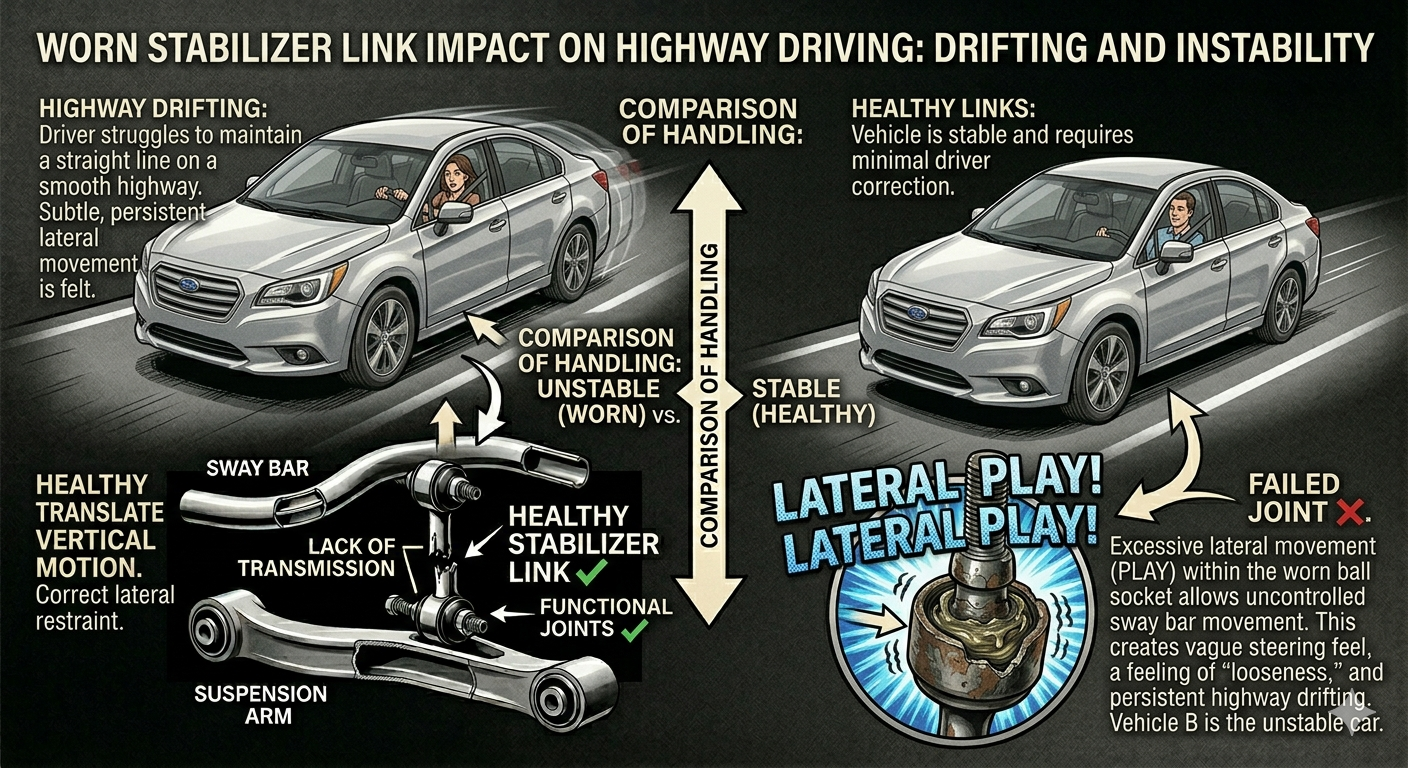
(Mechanic’s Note: The Crosswind Effect) A broken link on the highway often creates a floating sensation where the car feels like it’s caught in a crosswind, requiring constant, small steering corrections to keep it tracking straight. This car float or “loose handling” significantly increases driver fatigue on long trips.
4. Rattling Over “Smooth” Roads
While the loud clunk is usually triggered by major bumps, if the stabilizer link ball joints are completely worn and dry, they can make a continuous, high-frequency rattle even when driving on what seems like a standard, smooth road surface. This indicates advanced failure.
5. Poor Handling During Acceleration or Braking (Minor)
Although less significant than the noise or sway, a functioning stabilizer link contributes subtly to the stabilization of the vehicle during heavy braking (reducing nose dive) and acceleration (reducing squat). If a link is broken, a driver might feel a minor decrease in this stabilizing effect.
Can You Drive With a Bad Stabilizer Link? (Is it Safe?)
The Short Answer: Yes, you can drive with a bad stabilizer link, but it is not recommended. It is not an emergency (like failed brakes), but it compromises your handling precision and safety.
Here are the specific risks you accept by not fixing failed links:
- Compromised Handling Precision: The vehicle will feel unsafe during fast lane changes and other sudden, emergency avoidance maneuvers.
- Accelerated Tire Wear: Incorrect suspension angles put unexpected stress on your tires, shortening their life.
- Damage to Other Components: Without the stabilizer link absorbing force, that extra stress is transferred directly to other suspension parts, such as shocks, struts, or control arm bushings, causing them to fail prematurely.
- Component Interference: If the link breaks completely, it can dangle. While rare, it is possible for the loose metal end to contact and damage brake lines, anti-lock brake sensors (ABS), or even your tires.
Summary & Action: How to Inspect Your Suspension (And What to Do Next)
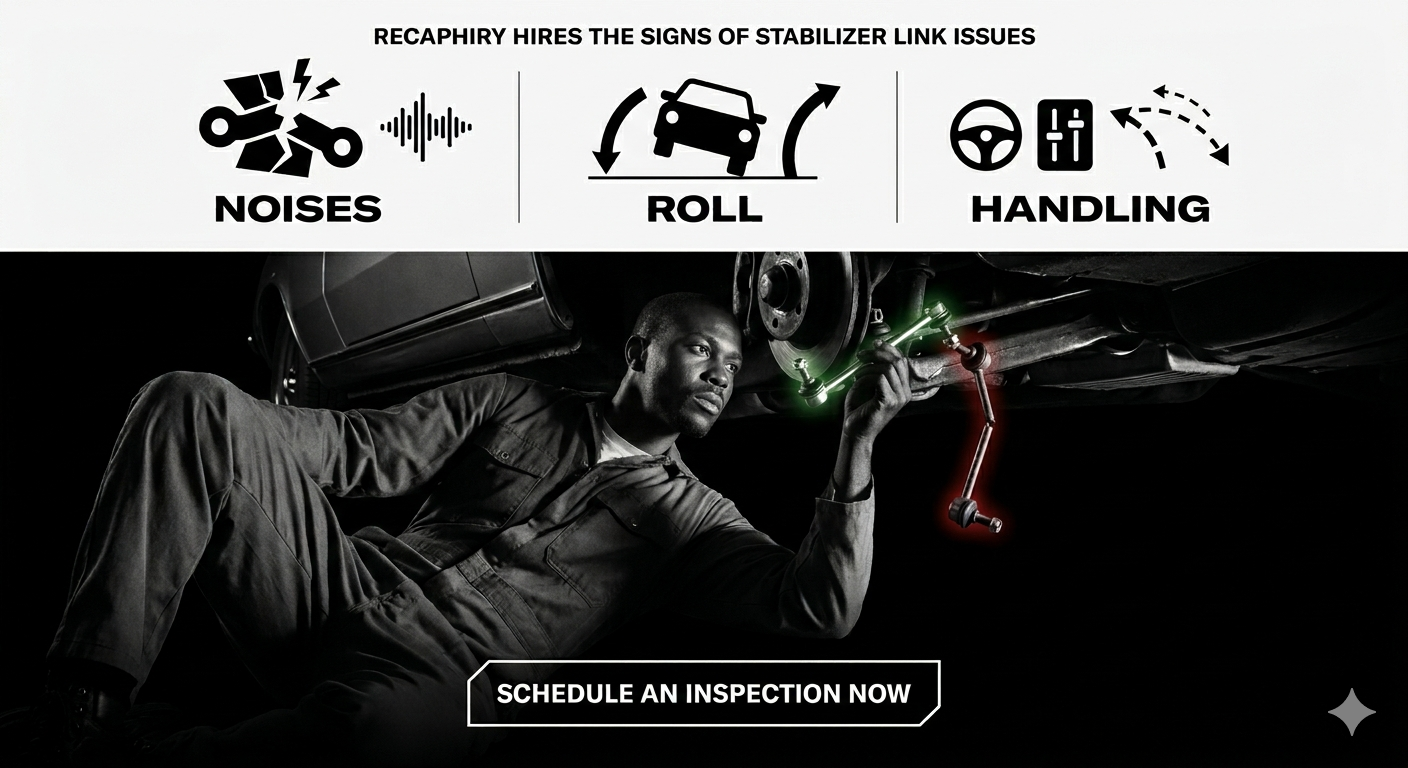
If you are experiencing any of the symptoms above, it’s time to take action.
A professional suspension inspection is the best route, but a quick “Shake Test” can sometimes confirm the diagnosis.
- Safely raise the front or rear wheel of the side making noise and support it on jack stands.
- Locate the stabilizer link (often a small, near-vertical rod just behind the brake rotor).
- Vigorously grasp and shake the link. A healthy link will be tight and have zero play. If it clunks, clicks, or has visible lateral movement within the ball joint, it is bad and must be replaced.
Conclusion: Restore Precision Handling at Kamsiparts Automotive
A safe, confident, and smooth drive requires precise suspension components working in harmony. Your stabilizer links (and sway bar links) are essential to that equation. Don’t wait for the clunking noise to turn into a handling crisis.
When you notice these bad end link symptoms, rely on high-quality suspension parts from Kamsiparts. Our components are built to meet or exceed OEM specifications, restoring the precision handling your suspension deserves.
Explore our full inventory of suspension products and schedule your professional suspension inspection at Kamsiparts Automotive today. Get back to enjoying the road with confidence.




Write A Comment