
A failing engine oil pan usually gives warning signs before it becomes a serious problem. One of the most common signs is oil leaking underneath the vehicle. If you constantly notice dark oil spots on the ground after parking, the oil pan or its gasket may be cracked, loose, or worn out.
Another clear sign is low engine oil levels. When the oil pan leaks, the engine gradually loses oil, forcing you to refill more often than usual. Ignoring this can eventually lead to engine overheating or internal damage.
Drivers may also hear unusual engine noises such as knocking or ticking sounds. This happens because the engine is not receiving enough lubrication due to oil loss. In severe cases, the oil pressure warning light may appear on the dashboard, indicating that the engine is struggling to maintain proper oil circulation.
Physical damage to the pan itself is also common. Since the oil pan sits underneath the engine, it can easily get dented or cracked after hitting speed bumps, rocks, potholes, or road debris. A damaged oil pan may restrict oil flow or cause continuous leakage.
What Is the Life Expectancy of an Oil Pan?
An engine oil pan is designed to last for many years, often for the entire lifespan of the vehicle if properly maintained. Most oil pans can remain functional for over 150,000 to 200,000 kilometers without needing replacement.
However, the actual lifespan depends heavily on driving conditions and maintenance habits. Vehicles driven on rough roads are more likely to suffer oil pan damage because the component is constantly exposed underneath the engine. Rust and corrosion can also shorten its life, especially in areas with high moisture or poor road conditions.
Poor maintenance practices may also reduce durability. For example, overtightening the drain plug during oil changes can crack the threads or weaken the pan over time. Neglecting oil leaks or using damaged gaskets can also accelerate wear.
In many cases, it is not the oil pan itself that fails first, but the oil pan gasket. The gasket may dry out, shrink, or crack after years of heat exposure, causing leaks even when the pan is still in good condition.
What Does an Engine Oil Pan Do?
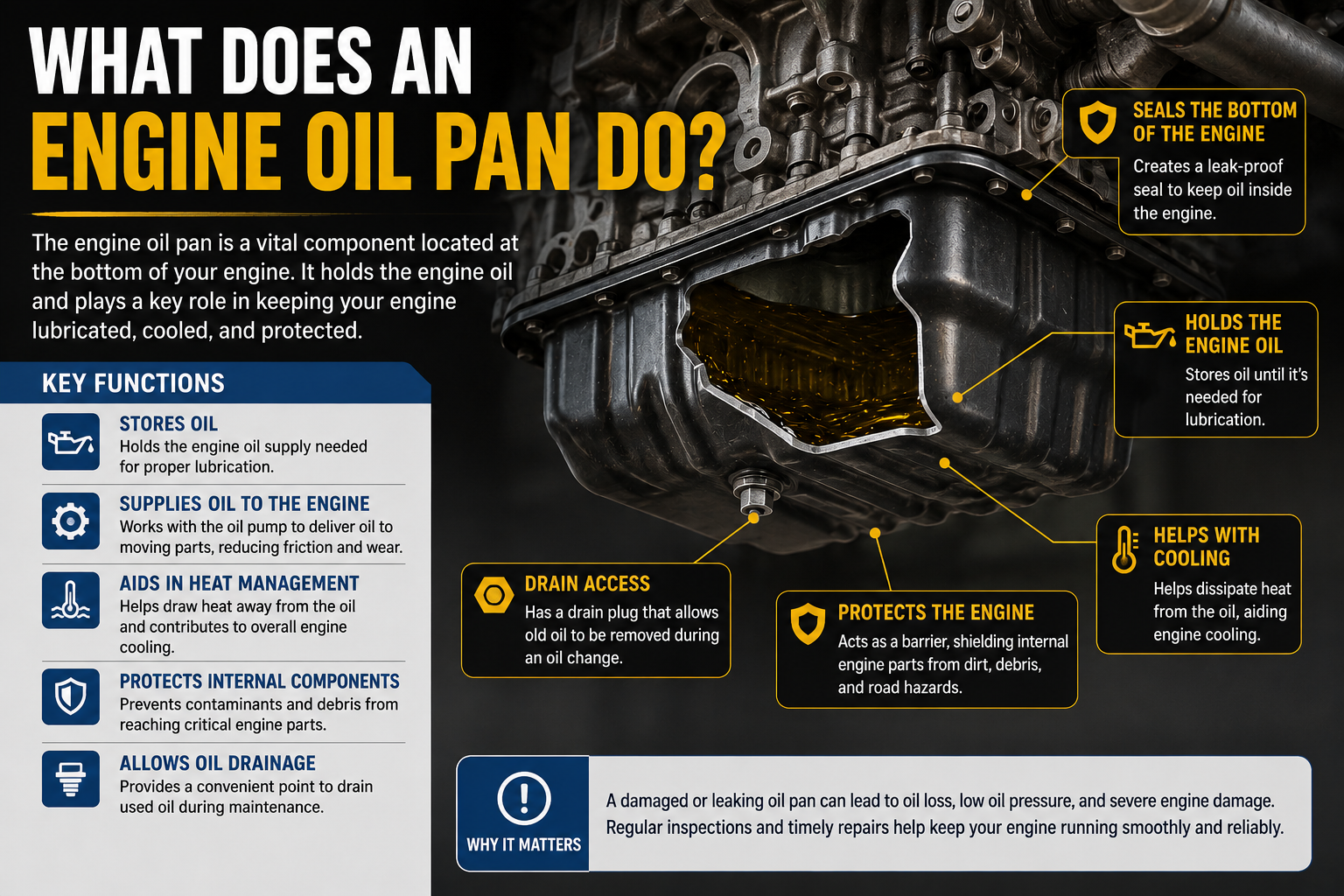
The engine oil pan plays a major role in the lubrication system of a vehicle. It is a metal reservoir located at the bottom of the engine that stores engine oil when the engine is not circulating it.
As the engine runs, oil is pumped from the oil pan through different engine components to reduce friction, cool moving parts, and prevent excessive wear. Once the oil completes its cycle, it flows back into the oil pan where the process begins again.
The oil pan also helps with cooling. Because it holds a large quantity of oil, it assists in dissipating heat generated by the engine. Some modern oil pans are even designed with cooling fins to improve heat transfer.
Another important function of the oil pan is protecting the oil supply from contamination. It seals the bottom of the engine and helps keep dirt, debris, and moisture away from the lubrication system.
Without a properly functioning oil pan, the engine would quickly lose lubrication, leading to overheating, increased friction, and eventually catastrophic engine failure.
Can I Drive With a Damaged Oil Pan?
Driving with a damaged oil pan is risky and should only be considered in emergencies. A cracked or leaking oil pan can rapidly reduce the engine’s oil supply, and without enough oil, internal engine parts begin to grind against each other.
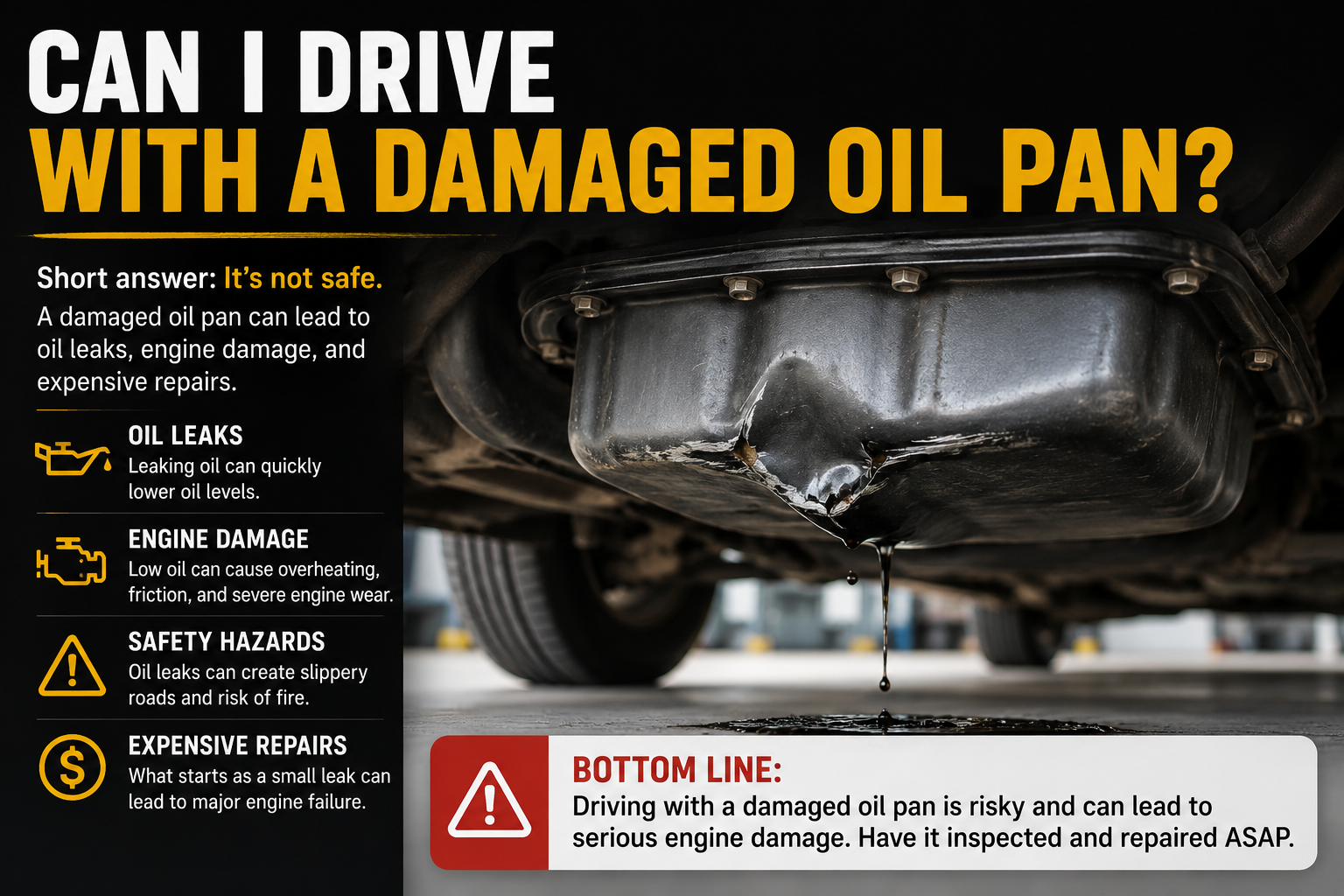
If the damage is minor and the leak is very slow, the vehicle may still operate temporarily. However, the oil level must be checked constantly. Even a small leak can become worse while driving due to engine vibration and road impact.
Severe oil pan damage can cause sudden oil loss. If this happens while the vehicle is moving, the engine may overheat or seize completely. Repairing an engine damaged by oil starvation is far more expensive than replacing the oil pan itself.
Drivers should also remember that a hanging or cracked oil pan may become worse when driving over rough surfaces. A single impact from a pothole or speed bump can turn a manageable leak into a major failure.
The safest option is always to repair or replace a damaged oil pan as soon as possible before it affects the engine.
How Do I Know If My Oil Pan Is Damaged?
There are several ways to identify a damaged oil pan. The first and most obvious sign is visible oil leakage underneath the engine area. Fresh engine oil usually appears brown or black and may collect directly under the front center of the vehicle.
Another way is through visual inspection. A mechanic may lift the vehicle and inspect the oil pan for dents, cracks, corrosion, or loose bolts. Deep dents are especially dangerous because they can interfere with oil pickup inside the pan.
Frequent low oil warnings on the dashboard may also point to oil pan problems. If oil levels keep dropping despite regular top-ups, the pan or gasket may be leaking.
Burning oil smell is another warning sign. Leaking oil can drip onto hot engine or exhaust components, creating smoke and a strong burnt odor while driving.
In some situations, engine overheating or unusual knocking sounds may indicate that the oil pan damage has already started affecting lubrication performance.
How Often Should I Change the Oil Pan?
Unlike engine oil or filters, the oil pan does not follow a regular replacement schedule. It is usually only replaced when it becomes damaged, heavily rusted, cracked, or impossible to repair.
Many vehicles keep the original oil pan for decades without any issues. However, the oil pan gasket may require replacement much earlier due to normal wear and heat exposure.
Routine inspections during oil changes are important because they help detect leaks, dents, or corrosion before serious damage occurs. Mechanics often inspect the oil pan each time the vehicle is serviced.
Replacement becomes necessary when repairs are no longer reliable. For example, a severely cracked pan, stripped drain plug threads, or extensive rust may require a complete new assembly instead of temporary fixes.
Proper driving habits can also extend the lifespan of the oil pan. Avoiding rough roads, driving carefully over speed bumps, and performing regular maintenance all help prevent premature damage.