
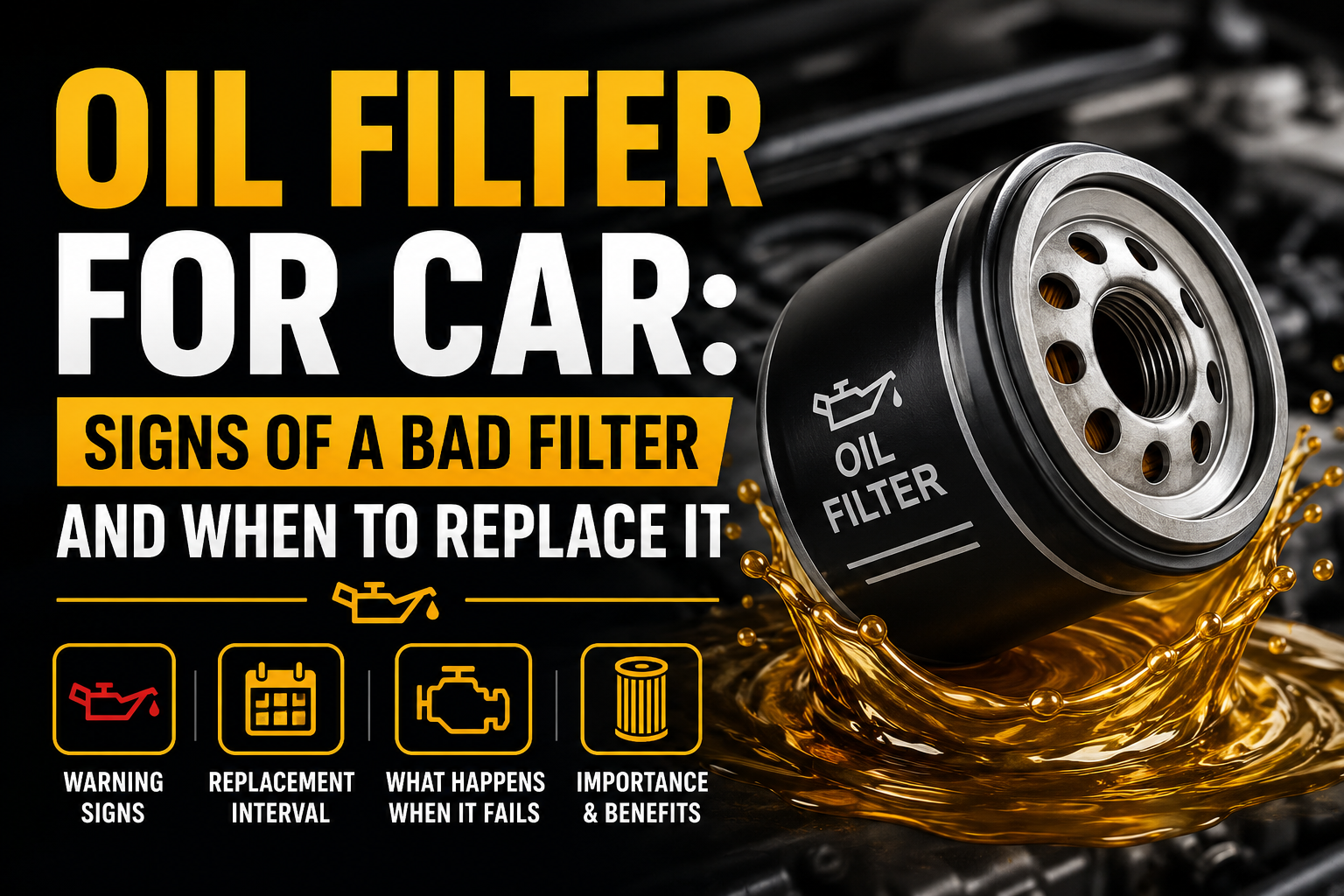
Your car engine depends on clean oil to run smoothly, and the oil filter is the part responsible for keeping that oil free from dirt and harmful particles. Many drivers focus only on changing engine oil but forget that the oil filter plays an equally important role in protecting the engine.
A bad or clogged oil filter can quietly damage your engine over time, reduce performance, and even lead to expensive repairs if ignored. Understanding how it works and knowing the warning signs can help you avoid major problems.
What Does an Oil Filter Do in a Car?
The oil filter removes contaminants from the engine oil before the oil circulates through the engine. As oil moves around engine components, it picks up:
- Dirt
- Metal particles
- Carbon deposits
- Sludge
- Dust and debris
The oil filter traps these harmful particles and allows only clean oil to pass through.
Why the Oil Filter Is Important
A properly functioning oil filter helps:
- Reduce engine wear
- Improve engine performance
- Extend engine lifespan
- Maintain proper oil flow
- Prevent sludge buildup
Without an oil filter, dirty oil would continuously circulate inside the engine, causing friction and damage to important engine parts.
What Are the Signs of a Clogged Filter?
A clogged oil filter restricts the flow of oil, which can affect engine lubrication and performance. Since oil is essential for cooling and protecting engine components, restricted flow can quickly create serious problems.
Common Signs of a Clogged Oil Filter
1. Oil Pressure Warning Light
One of the first warning signs is the oil pressure light appearing on the dashboard. This usually means oil is not flowing properly through the engine.
2. Engine Overheating
When oil circulation becomes restricted, the engine experiences more friction and heat buildup, which may cause overheating.
3. Unusual Engine Noises
Ticking, knocking, or metallic sounds may occur because engine parts are not receiving enough lubrication.
4. Poor Engine Performance
A clogged filter can make the engine feel sluggish or less responsive during acceleration.
5. Dirty Exhaust Smoke
Excessive or dark exhaust smoke may indicate poor oil circulation and engine stress.
Ignoring these signs can eventually lead to severe engine damage.
How Often Should You Change Your Oil Filter?
Most mechanics recommend changing the oil filter every time you change your engine oil.
General Replacement Guide
- Conventional oil: Every 5,000–10,000 km
- Synthetic oil: Every 10,000–15,000 km
However, driving conditions also matter.
You May Need Earlier Replacement If You:
- Drive frequently in heavy traffic
- Travel on dusty roads
- Make frequent short trips
- Carry heavy loads regularly
- Drive in extremely hot weather
In places with rough road conditions and traffic congestion, oil filters may wear out faster than expected.
What Happens When an Oil Filter Fails?
When an oil filter fails, it can no longer clean the oil properly or regulate oil flow effectively.
Problems Caused by Oil Filter Failure
Dirty Oil Circulation
Contaminated oil flows directly into the engine, increasing wear on engine components.
Increased Engine Damage
Metal particles and sludge can damage bearings, pistons, and cylinders.
Reduced Fuel Efficiency
A stressed engine consumes more fuel because it has to work harder.
Engine Knocking
Poor lubrication increases friction inside the engine, causing knocking sounds.
Complete Engine Failure
In severe cases, lack of proper lubrication can cause the engine to seize completely.
Replacing an oil filter is inexpensive compared to rebuilding or replacing an engine.
How Do I Know If My Oil Filter Needs Changing?
Your car often gives subtle warnings before the filter becomes completely blocked.
Signs Your Oil Filter Needs Changing
- Oil becomes dirty very quickly after an oil change
- Engine feels rough or noisy
- Oil leaks near the filter area
- Reduced engine performance
- Rising engine temperature
- Oil pressure warning light appears
Even if there are no obvious symptoms, replacing the filter during every oil change is the safest option.
How Do I Know My Oil Filter Is Bad?
A bad oil filter usually shows more noticeable symptoms than a slightly clogged one.
Signs of a Bad Oil Filter
1. Oil Leakage
A damaged or poorly installed filter may leak oil around the housing area.
2. Low Oil Pressure
The engine may struggle to maintain proper oil pressure due to restricted flow.
3. Burning Smell
Oil leaking onto hot engine components can produce a burning smell.
4. Engine Knocking or Ticking
Insufficient lubrication causes internal engine parts to make unusual sounds.
5. Dirty Engine Oil
If the oil looks extremely dirty shortly after replacement, the filter may not be working properly.
A bad oil filter should be replaced immediately to avoid long-term engine damage.
Final Thoughts
The oil filter may be small, but it plays a massive role in protecting your car engine. Clean oil keeps the engine lubricated, cool, and running efficiently, while the oil filter ensures harmful contaminants do not damage internal components.
Regular oil and filter changes are among the cheapest ways to extend engine life and avoid costly repairs. If you notice warning signs like low oil pressure, unusual engine noises, overheating, or dirty oil, it may be time to inspect and replace the oil filter before the problem becomes serious.