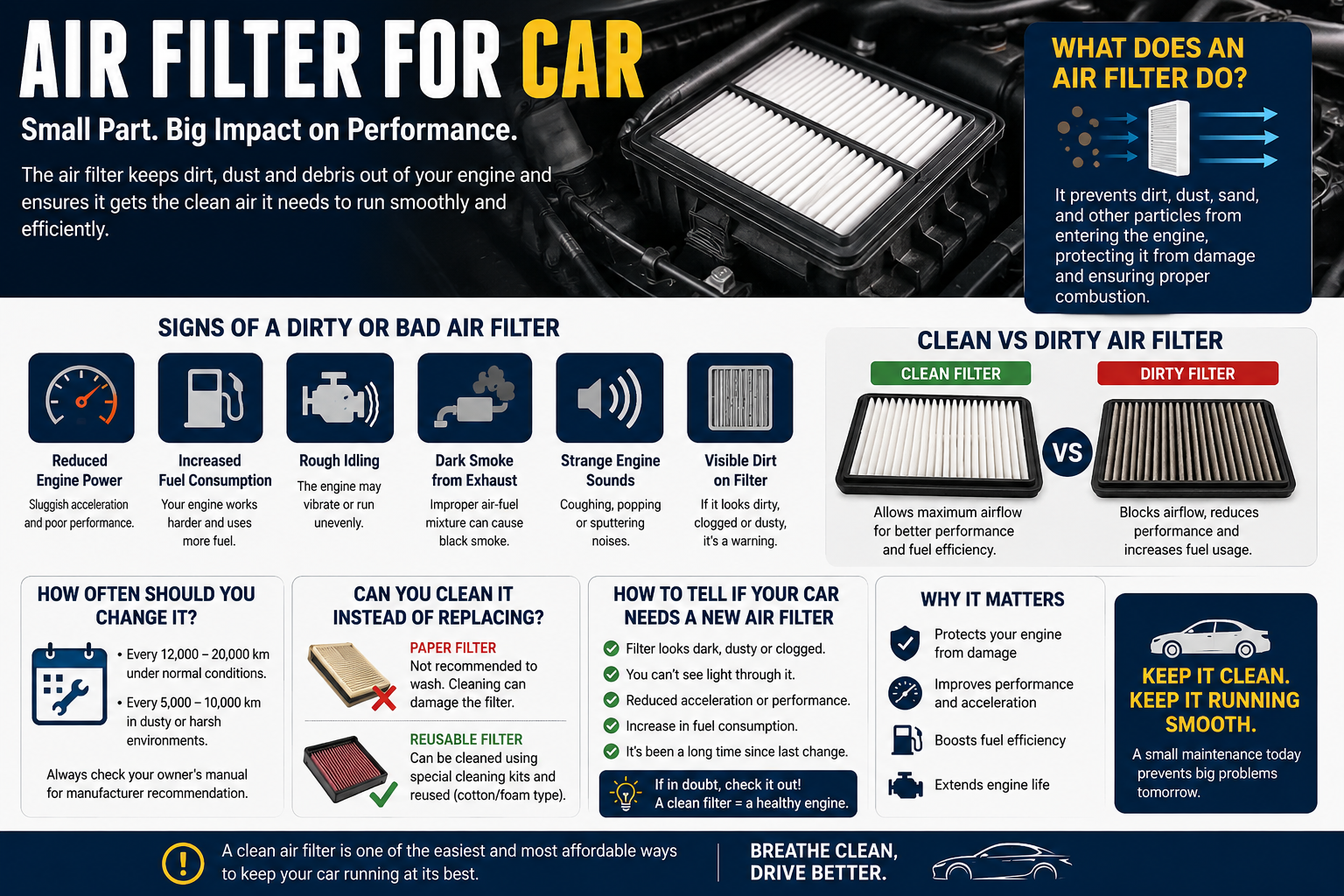
Your car’s air filter may look small and simple, but it plays a huge role in keeping the engine healthy. A clean air filter allows the engine to breathe properly, while a dirty one can affect fuel consumption, acceleration, and overall performance.
Many drivers ignore the air filter until problems start showing up. Understanding how it works and knowing when to replace it can save you money on fuel and help your engine last longer.
What Does an Air Filter Do for Your Car?
The air filter prevents dirt, dust, sand, leaves, and other particles from entering the engine. Your engine needs clean air to mix with fuel for combustion, and the filter ensures that only clean air gets through.
Without an air filter:
- Dirt can damage internal engine parts
- Engine performance may reduce
- Fuel efficiency may drop
- The engine may wear out faster
In places with dusty roads or heavy traffic, the air filter becomes even more important because it traps more contaminants before they reach the engine.
What Are the Signs of a Dirty Air Filter?
A dirty air filter usually affects airflow into the engine. When the engine doesn’t receive enough clean air, several problems may begin to appear.
Common signs include:
1. Reduced Engine Power
Your car may feel sluggish when accelerating or overtaking. The engine struggles because airflow is restricted.
2. Increased Fuel Consumption
A clogged filter can cause the engine to use more fuel than normal. If you notice more frequent fuel station visits, the air filter could be part of the problem.
3. Rough Idling
The engine may vibrate or sound uneven while the car is stationary.
4. Dirty or Black Exhaust Smoke
In some cases, a restricted air filter can create an improper air-fuel mixture, leading to dark smoke from the exhaust.
5. Strange Engine Sounds
You may hear coughing, popping, or mild sputtering noises from the engine.
6. Visible Dirt on the Filter
If the filter looks dark, dusty, or clogged during inspection, it likely needs attention.
What Are the Symptoms of a Bad Air Filter?
Many people use the terms “dirty air filter” and “bad air filter” interchangeably. A bad air filter simply means it has become too clogged or damaged to function properly.
Symptoms include:
- Weak acceleration
- Poor fuel economy
- Engine hesitation
- Rough engine performance
- Difficulty during startup
- Check engine light in some modern vehicles
Over time, a bad air filter forces the engine to work harder than necessary.
How Do I Know if My Air Filter Is Working?
A properly working air filter allows your engine to run smoothly without noticeable issues.
Signs your air filter is working well:
- Smooth acceleration
- Stable fuel economy
- Clean engine airflow
- Easy engine startup
- No unusual engine noises
- The filter appears clean during inspection
Most air filters work quietly in the background, so if your car runs normally, the filter is likely doing its job.
How to Tell if a Car Needs a New Air Filter
Sometimes the easiest way to know is through a simple inspection.
Your car may need a new air filter if:
- The filter looks dark or clogged
- You cannot see light through the filter material
- Fuel consumption suddenly increases
- The engine feels less responsive
- The car has been driven many kilometers without replacement
Drivers who frequently travel on dusty roads should inspect their air filters more often.
How Often Should You Change Your Air Filter in the Car?
Replacement intervals depend on driving conditions and environment.
General recommendation:
- Every 12,000–20,000 km under normal driving conditions
- Every 5,000–10,000 km in dusty environments
If you drive regularly in traffic, construction zones, or dusty roads, your filter may clog faster than expected.
Checking the air filter during routine servicing is always a good habit.
Can I Clean My Car Air Filter Instead of Replacing It?
This depends on the type of filter your vehicle uses.
Paper Air Filters
Most standard vehicles use paper filters. These are usually not designed to be washed. Cleaning them aggressively may damage the filter material.
Reusable Performance Filters
Some aftermarket filters made from cotton or foam are washable and reusable. These require proper cleaning kits and drying procedures.
Even reusable filters eventually wear out and must be replaced.
For many everyday drivers, replacing a dirty filter is usually safer and more effective than attempting to clean it.
Why Ignoring a Dirty Air Filter Can Cost You More
Some drivers delay replacing the air filter because it seems unimportant. However, neglecting it can lead to:
- Higher fuel expenses
- Reduced engine lifespan
- Poor driving performance
- Increased engine stress
A small maintenance item like an air filter can prevent bigger and more expensive engine problems later.
Final Thoughts
Your car’s air filter is one of the simplest but most important maintenance components in the engine system. It protects the engine from harmful dirt and ensures proper airflow for smooth combustion.
Replacing it regularly helps improve fuel economy, engine performance, and overall reliability. If your car feels sluggish, consumes more fuel, or the filter looks dirty during inspection, it may be time for a replacement.
A clean air filter keeps your engine breathing properly and a healthy engine means a healthier car overall.