
Your car’s suspension system does more than just make your ride comfortable. It keeps your tires connected to the road, improves steering stability, and helps you stay in control while driving. One of the most important parts of that system is the strut.
Many drivers only notice their struts when the car starts bouncing excessively or making strange noises. Ignoring those signs can lead to poor handling, uneven tire wear, and even unsafe driving conditions.
Here’s everything you need to know about car struts, including how they work, signs of failure, and when they should be replaced.
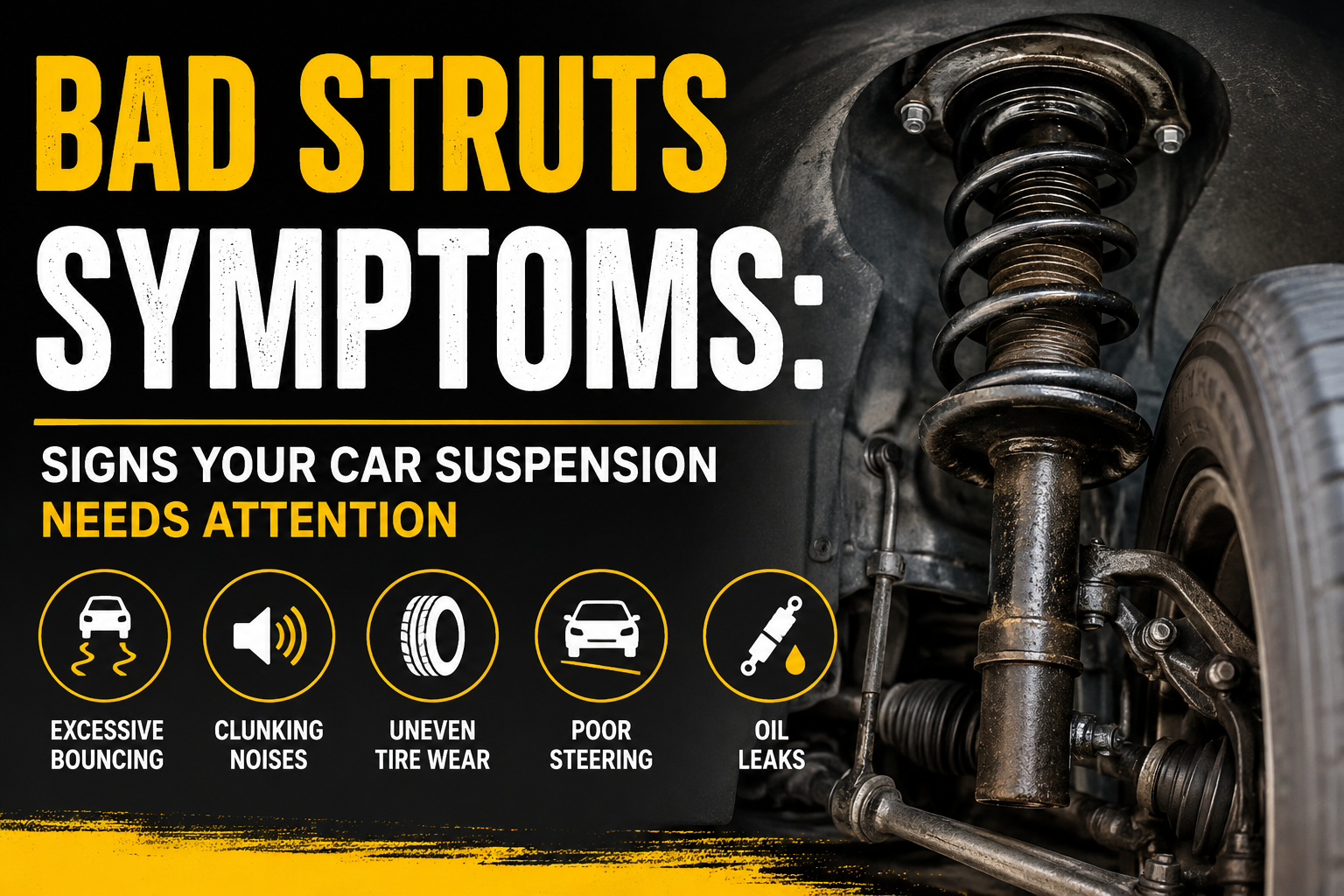
What Does a Car Strut Do?
A car strut is a major suspension component that combines several functions into one assembly. It helps absorb road shocks while also supporting the vehicle’s weight and maintaining wheel alignment.
In simple terms, struts help your car:
- Stay stable on rough roads
- Reduce bouncing after bumps
- Improve steering control
- Maintain proper tire contact with the road
- Support safe braking and cornering
Without functioning struts, every pothole or speed bump would feel much harsher, and your car would become more difficult to control.
Are Shocks and Struts the Same?
Many people use the terms “shocks” and “struts” interchangeably, but they are not exactly the same thing.
A shock absorber mainly controls the movement of the suspension and reduces bouncing.
A strut, on the other hand, is a complete structural component that includes:
- A shock absorber
- A coil spring
- Suspension support parts
This means a strut does more than absorb impact—it also helps support the vehicle’s structure and steering system.
That’s why replacing struts is usually more expensive and labor-intensive than replacing standard shock absorbers.
What Are the Symptoms of a Bad Strut?
Failing struts usually show multiple warning signs before complete failure. The symptoms often become more noticeable over time.
Common symptoms of bad struts include:
Excessive Bouncing
If your vehicle continues bouncing after going over a bump, the struts may no longer absorb road impact properly.
Nose Diving While Braking
A weak front strut can cause the front of the car to dip heavily when braking.
Vehicle Leaning During Turns
Bad struts reduce stability, causing the car to lean or sway excessively around corners.
Uneven Tire Wear
Worn struts can affect wheel alignment and tire contact, leading to irregular tire wear patterns.
Fluid Leakage
Oil leaking from the side of the strut body is a common sign that the internal seals have failed.
Rough or Unstable Ride
The vehicle may feel loose, shaky, or unstable, especially at higher speeds.
Clunking or Knocking Sounds
Loose or worn strut mounts can create noticeable suspension noises over bumps.
What Does a Bad Shock and Strut Sound Like?
Suspension problems often reveal themselves through unusual noises.
A bad shock or strut may produce:
- Clunking sounds over bumps
- Knocking noises from the wheel area
- Creaking when turning
- Rattling on rough roads
- Thudding sounds after hitting potholes
These sounds happen because worn suspension parts can no longer properly cushion road impacts. As components loosen or wear internally, metal parts begin hitting against each other.
If these noises become frequent, the suspension system should be inspected immediately.
How Do I Know If My Car Needs a Strut?
Your car will usually give clear signs when the struts are failing.
You may need new struts if:
- The car feels bouncy or unstable
- Steering feels loose
- Braking distance increases
- Tires wear unevenly
- The suspension makes noise constantly
- The vehicle sways excessively
- The car bottoms out over bumps
One quick method mechanics often use is the bounce test. Push down hard on the front or rear of the vehicle and release it. If the car keeps bouncing more than once or twice, the struts are likely worn out.
However, a professional suspension inspection gives the most accurate result.
How Long Do Struts Last in a Car?
Most struts last between 50,000 and 100,000 miles depending on driving habits and road conditions.
Several factors affect strut lifespan:
- Frequent potholes and rough roads
- Heavy vehicle loads
- Aggressive driving
- Poor road maintenance
- Extreme weather conditions
On smoother roads, struts can last much longer. But in areas with rough roads and heavy traffic, suspension components tend to wear out faster.
Even if struts haven’t completely failed, performance gradually declines over time. Many drivers don’t notice the difference until new struts are installed.
Can You Drive a Car That Has Bad Struts?
Technically, yes—but it is risky.
Driving with bad struts can reduce your ability to control the vehicle properly, especially during:
- Emergency braking
- Sharp turns
- Wet road conditions
- High-speed driving
Bad struts can also cause:
- Longer stopping distance
- Reduced tire traction
- Poor steering response
- Faster tire wear
- Suspension damage
The longer worn struts are ignored, the more stress they place on other suspension components.
In severe cases, the vehicle may become unsafe to drive.
Why Struts Should Never Be Ignored
Many drivers postpone suspension repairs because the vehicle still moves normally. But suspension problems usually worsen gradually.
Replacing worn struts early helps:
- Improve safety
- Restore ride comfort
- Protect tires from uneven wear
- Improve steering stability
- Reduce stress on suspension components
A healthy suspension system makes a major difference in both comfort and vehicle control.
Final Thoughts
Struts play a critical role in your vehicle’s safety, handling, and ride quality. When they begin to fail, your car will usually show warning signs such as bouncing, strange noises, uneven tire wear, or poor stability.
Ignoring those symptoms can lead to expensive repairs and unsafe driving conditions.
If your car feels rough, unstable, or noisy on the road, inspecting the struts early can save you money and improve your overall driving experience.
For quality suspension parts and reliable automotive solutions, visit Kamsiparts, “Your Number One Trusted Automotive Company.”